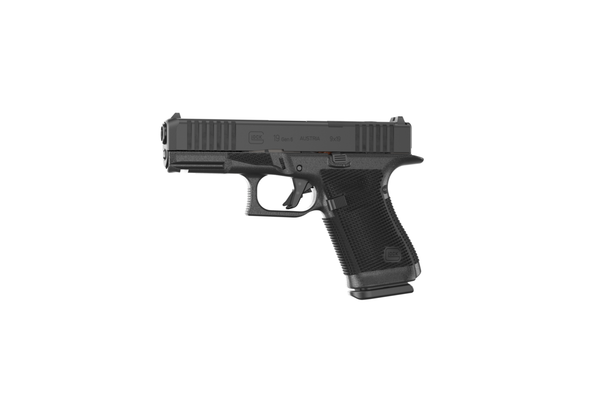
How to Choose the Right Ammo for Home Defense
The firearm gets the attention but the ammo matters just as much. Here's what to load in your handgun, shotgun, or rifle for home defense.

Choosing the right firearm for home defense gets most of the attention. The ammunition question gets less, which is a mistake. The round you load matters as much as the gun it goes in, and for home defense specifically, the wrong choice creates real problems that go beyond whether the threat is stopped.
This covers the fundamentals: bullet design, caliber, platform-specific considerations, and the one principle that overrides all of it.
The Fundamental Rule
Before getting into specifics, one principle applies to every home defense situation regardless of platform or caliber.
The fourth rule of firearms safety is to know your target and what is beyond it. In a home defense context, that means every round you fire has to be accounted for. Interior walls do not reliably stop bullets. Your neighbors' homes are not far away. Family members may be in other rooms. Ammunition choice is one of the variables you can control in advance, and it is worth controlling carefully.
FMJ vs. Hollow Point: Why It Matters
Full metal jacket ammunition is what most people shoot at the range. The bullet is encased in a metal jacket that prevents it from expanding on impact. That is useful for training because it keeps costs down and feeds reliably in almost every firearm. It is not the right choice for home defense.
FMJ rounds do not expand when they hit a soft target. They retain their shape and energy and keep traveling. In a home defense scenario, that means a round that passes through a threat continues through walls, doors, and potentially into other rooms or neighboring structures. The risk of hitting an unintended target is real and significant.
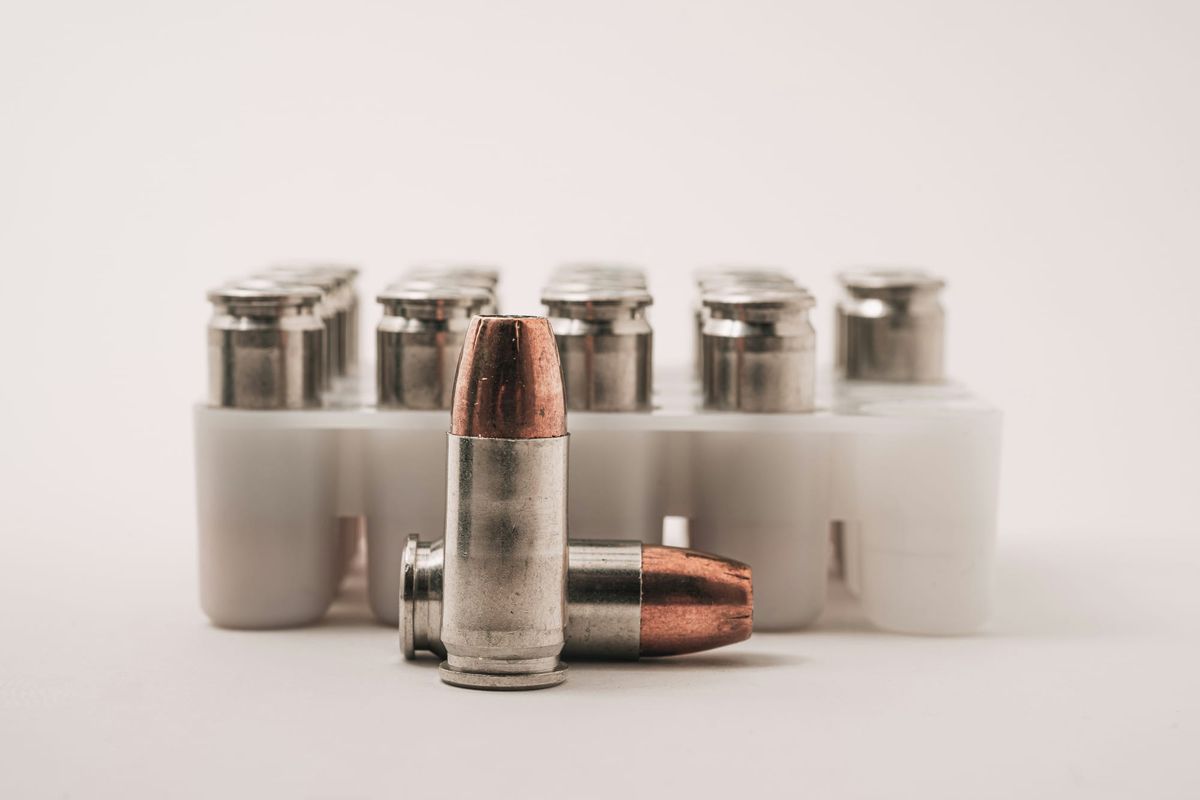
Jacketed hollow point ammunition is designed to expand on impact. The hollow cavity in the nose causes the bullet to mushroom outward when it contacts a target, transferring energy more efficiently, creating a larger wound channel, and slowing down. A properly expanding hollow point is less likely to exit the threat and less likely to penetrate multiple walls beyond the target.
For home defense in any platform, hollow point ammunition is the right choice. This is not a preference. It is what the data from law enforcement use and ballistic testing consistently supports.
Handguns: Caliber and Load
The caliber question for handguns has been effectively settled by modern ballistic research and law enforcement adoption patterns. The FBI transitioned back to 9mm in 2015 after extensive terminal ballistics testing concluded that modern 9mm hollow point loads perform equivalently to larger calibers like .40 S&W and .45 ACP while offering less recoil, higher magazine capacity, and lower cost per round for training.
For most home defense shooters, 9mm JHP is the right answer. It is controllable, high capacity, and extensively tested. Shooters who already carry and train with .45 ACP or .40 S&W can continue using those calibers with appropriate hollow point loads. The performance differences are marginal with quality defensive ammunition.
.357 Magnum from a revolver is genuinely effective but produces significant recoil and muzzle blast, particularly indoors. If it is what you have and what you train with, use good hollow points and accept the tradeoffs.
The specific loads with the most documented law enforcement use and the broadest field data behind them are the Speer Gold Dot, Federal HST, and Hornady Critical Duty lines. These are not marketing claims. They are the loads carried by federal agencies and police departments across the country, selected through extensive testing. Hornady also produces Critical Defense, a civilian-oriented variant of the same concept designed for consistent expansion through clothing. Either is a well-supported choice for home defense. If you are choosing a 9mm defensive load and have no other basis for a decision, any of those options is a reasonable starting point. Run 50 rounds through your specific firearm to confirm reliable feeding and function before committing to them as your carry load.
Shotguns: Buckshot, Not Slugs
A 12-gauge shotgun is a capable home defense tool, and ammunition selection matters more than most people realize.
00 buckshot is the standard recommendation for home defense. Each shell contains multiple pellets, typically eight or nine in a standard 00 load, that spread on firing. The pattern increases with distance, which is relevant to how your home's layout affects effective range. At typical home defense distances of ten to fifteen yards or less, the pattern is tight enough to be accurate while delivering significant energy transfer.
Slugs are single large projectiles designed for accuracy at longer ranges. They penetrate deeply, which is useful for hunting large game and a liability in a home defense context. A slug that misses or passes through a target has more potential for collateral damage than buckshot. For most home defense situations, slugs are the wrong tool.
Birdshot is not an appropriate home defense load. The small pellets lack the penetration depth to reliably stop a threat at even moderate distances. It is useful for what it is designed for and not for this application.
For tighter patterns and more consistent performance, Federal FlightControl buckshot uses a wad design that keeps pellets together longer than standard buckshot loads, reducing pattern spread at home defense distances.
Rifles and AR-15s: The Right Loads
An AR-15 in .223/5.56 is a legitimate home defense option. It is accurate, low recoil, high capacity, and highly maneuverable in trained hands. The ammunition consideration is important and often misunderstood.
The common assumption is that rifle ammunition over-penetrates more than handgun ammunition. For standard FMJ, that is true. However, the right .223 defensive loads, specifically frangible, soft-point, and hollow-point designs, actually penetrate fewer walls than standard pistol FMJ rounds. Lightweight, high-velocity .223 bullets fragment rapidly on impact with hard surfaces, shedding energy quickly. A 9mm FMJ round will travel through more interior walls than a properly fragmenting .223 defensive load.
Avoid 55-grain FMJ for home defense. It is the standard training round and it over-penetrates. Use purpose-built defensive loads designed to fragment or expand on impact.
The tradeoffs of a rifle for home defense are real: it is louder indoors than a handgun or shotgun and requires more space to maneuver in tight hallways and rooms. Those are platform decisions to weigh separately. If you use a rifle for home defense, use the right ammunition for it.
The Short Version
Use hollow points in handguns. Use buckshot in shotguns. Use fragmenting or expanding loads in rifles. Train with your defensive load to confirm it functions reliably in your specific firearm. Know what is beyond your target before you fire.
The ammunition decision is one you make in advance, when you have time to think clearly. Make it now, before you ever need it.