
Glock Gen6 Is Here. Here's What Changed.
The G17, G19, and G45 Gen6 hit shelves January 20, 2026. Here's what Glock changed, what stayed the same, and whether it's worth upgrading from your Gen5.

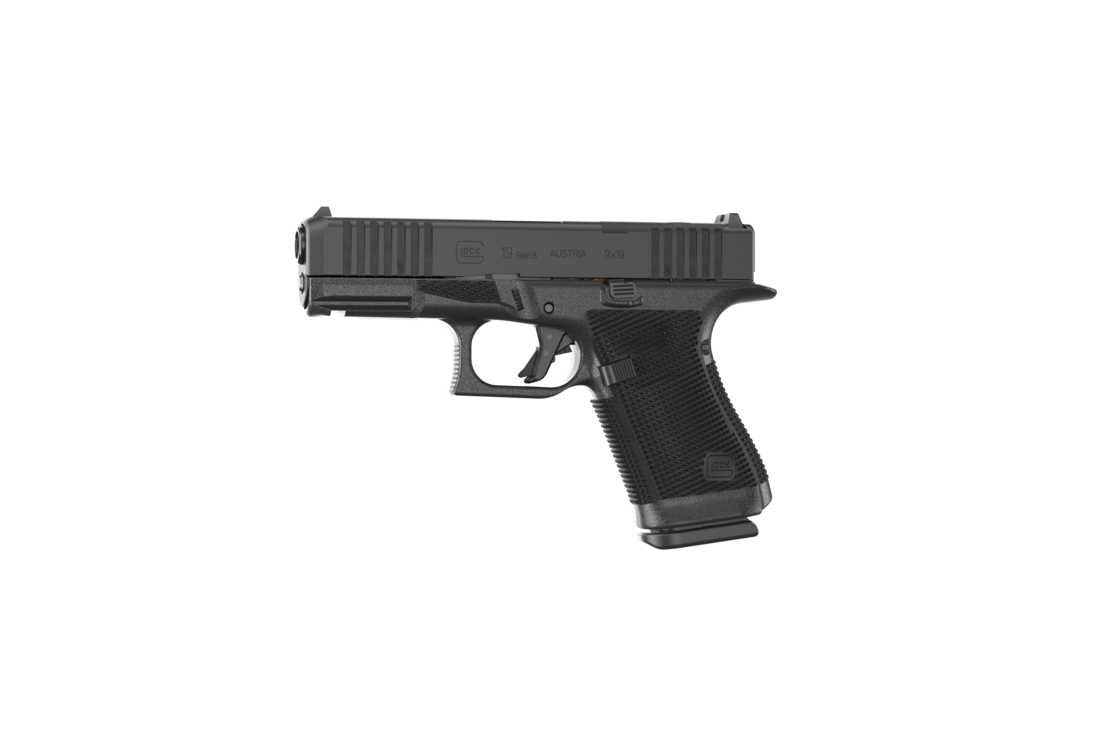
Glock announced the sixth generation of its pistol line in December 2025 and released they were released on January 20, 2026. The launch models were the G17 Gen6, G19 Gen6, and G45 Gen6, all chambered in 9mm. MSRP is $745 across the line and they are available now at authorized dealers nationwide. Each pistol ships with three magazines, three optic plates, interchangeable backstraps, a magazine speed loader, cleaning kit, and case.
For a company that has spent four decades being accused of never changing anything, the Gen6 represents the most substantive round of updates since the Gen4 introduced interchangeable backstraps in 2010. Whether that makes it worth an upgrade depends on what generation you are currently running and what you do with the gun.
Here is what changed, what did not, and what it means.
A Little Context
Glock has released five previous generations since Gaston Glock brought his polymer-framed pistol to the United States in 1986. The Gen5, which launched in 2017, was the last major revision. That makes this roughly a nine-year gap between generations, longer than any previous cycle.
The Gen5 was well-regarded. It introduced the Glock Marksman Barrel for improved accuracy, removed the finger grooves that divided shooters for years, added ambidextrous slide stop levers, and applied Glock's durable nDLC finish to the slide. It was a solid platform that addressed most of the long-standing complaints about the Gen4.
The Gen6 does not throw any of that out. It builds on it.
The Nine Changes at a Glance
Glock's official Gen6 page numbers the specific updates:
- Palm swell — contours the grip to the natural curvature of the hand
- RTF6 grip texture — combines two previous RTF textures into one, covering more surface area including the thumb rest
- Enlarged beavertail — encourages a higher grip while allowing the slide to cycle freely
- Slide stop lever enlarged border — prevents unintentional activation during firing
- Extended textured thumb rest — provides an additional control point for the support hand during recoil
- Deeper angled slide serrations — more tactile engagement for slide manipulations
- Undercut trigger guard — allows a higher grip position and improved comfort
- Flat-faced trigger — consistent finger placement throughout the trigger pull, maintains the Safe Action System
- Optic ready system — three included optic plates allow direct optic mounting into the slide
What Changed: The Details
The Frame and Grip
This is where most of the Gen6 work happened and where most shooters will feel the difference immediately.
Glock developed the new frame geometry by measuring the hands of its entire U.S. workforce, analyzing what it describes as a broad range of hand sizes and shooting styles. The result is a grip that is slightly less boxy than the Gen5, with subtle palm swells on each side that give the hand a more natural place to settle. The thumb rest area has been extended and textured, giving the support hand thumb a consistent reference point.
The new RTF6 grip texture is an evolution of Glock's previous RTF patterns. Earlier Rough Texture Frame designs, particularly the aggressive RTF2 from the Gen4 era, were polarizing. The RTF6 splits the difference, covering more surface area than any previous generation while striking a balance between positive grip and not shredding clothing or skin during carry. It now extends up to the ambidextrous slide stop rather than stopping below the magazine release.
The beavertail is now built into the frame rather than added via backstrap. This addresses the long-running complaint about slide bite and high-grip shooters catching the top of the slide on their hand during recoil. It is a small change that will matter to a specific group of shooters and be invisible to everyone else.
The trigger guard undercut has been deepened, allowing a higher grip position. Combined with the beavertail and palm swell, the Gen6 frame is designed to put the shooter's hand higher and closer to the bore axis than previous generations. Lower bore axis means less muzzle flip. Less muzzle flip means faster follow-up shots.
The Trigger
The Gen6 ships with a flat-faced trigger as standard equipment for the first time in Glock's history. The flat face changes the geometry of finger contact throughout the trigger pull, which many shooters find improves consistency and reduces the tendency to push shots off target.
Crucially, the trigger pull weight and the Safe Action System remain unchanged. This is still a Glock trigger in every functional sense. The flat face is a geometry change, not a mechanism change. Shooters who have been installing aftermarket flat-faced triggers on their Gen5s will recognize immediately what Glock has done here. They have brought a popular aftermarket modification into the factory gun.
The Optic Ready System
The Gen5 MOS platform was functional but had known weaknesses. The mounting plates could loosen under sustained fire and the optic sat higher on the slide than many shooters preferred.
The Gen6 ORS addresses both issues. Three polymer mounting plates are included with each pistol, supporting RMR and DPP footprints. The plates act as what Glock describes as crush washers, allowing the optic to sit deeper in the slide for a lower mounting height. The result is a more stable optic platform with a lower bore axis relationship between the red dot and the barrel.
In 2026, buying a duty or carry pistol without considering an optic is increasingly the exception rather than the rule. Glock building a better optics platform into the Gen6 as standard equipment rather than an MOS variant is the right call for where the market is.
Slide Serrations
The Gen6 slide serrations are angled deeper into the slide surface. This is a tactile improvement for press checks, chamber confirmations, and administrative handling. It is not dramatic but it is noticeable.
Slide Stop Fence
A raised fence now surrounds the slide stop lever. This addresses a real problem for high-grip shooters and competitive shooters whose thumbs were inadvertently riding the slide stop and preventing the slide from locking back on an empty magazine. If you have ever had a Gen5 fail to lock back and traced it to your thumb position, this is the fix.
Recoil Spring
The Gen6 returns to a single captive recoil spring, stepping back from the dual recoil spring assembly used in the Gen4 and Gen5. The single spring was standard through the Gen3. Glock's reasoning is mechanical simplicity: fewer components, easier field stripping, more straightforward maintenance. Whether this affects felt recoil in any meaningful way for the average shooter is debatable, but the simplification is consistent with Glock's core design philosophy.
What Did Not Change
The 22-degree grip angle is unchanged. If Glock's grip angle has never worked for you, the Gen6 does not fix that.
Magazine compatibility is maintained across Gen3, Gen4, Gen5, and Gen6. Your existing magazines run in the new gun.
Barrel compatibility is not maintained. The Gen6 barrel geometry changed slightly, which means previous generation barrels will not fit, and Gen6 barrels will not drop into older guns. Aftermarket barrel makers will catch up, but if you are running a threaded barrel in a Gen5 it will not transfer. Glock has confirmed factory threaded Gen6 barrels are coming but has not announced a release date.
The fundamental operating system is unchanged. Tilting delayed blowback action, Safe Action trigger system, three internal passive safeties. This is still a Glock.
Gen5 vs. Gen6: Is It Worth Upgrading?
On paper, the Gen6 improvements are meaningful rather than transformative. If you are running a Gen5 that fits your hand, runs reliably, and is already set up the way you want it, there is no urgent reason to replace it.
If you are in any of these situations, the Gen6 case is stronger:
You run an optic and have had issues with MOS plate stability. The ORS is a direct improvement.
You have smaller hands and have found the Gen5 grip too blocky. The palm swell and reduced grip circumference were developed specifically for this feedback.
Your thumbs ride the slide stop. The fence solves that.
You have been running an aftermarket flat-faced trigger. The Gen6 gives you that from the factory at no additional cost.
If you are coming from a Gen3 or Gen4, the accumulated improvements across two generations make the Gen6 a substantial upgrade.
Where to Find One
The G17 Gen6, G19 Gen6, and G45 Gen6 are available now at authorized Glock dealers nationwide at an MSRP of $745. Palmetto State Armory and Brownells are worth checking for current pricing and availability. Use GunBroker to compare pricing across sellers if your local dealer is out of stock.
Glock also released G17 Gen6 and G45 Gen6 models with the Aimpoint COA optic pre-installed in April 2026. The COA is a closed-emitter red dot in a low-profile aluminum housing rated to 40,000 rounds of 9mm. If you are buying a Gen6 and plan to run an optic anyway, the COA-equipped models are worth looking at before they sell through.


